

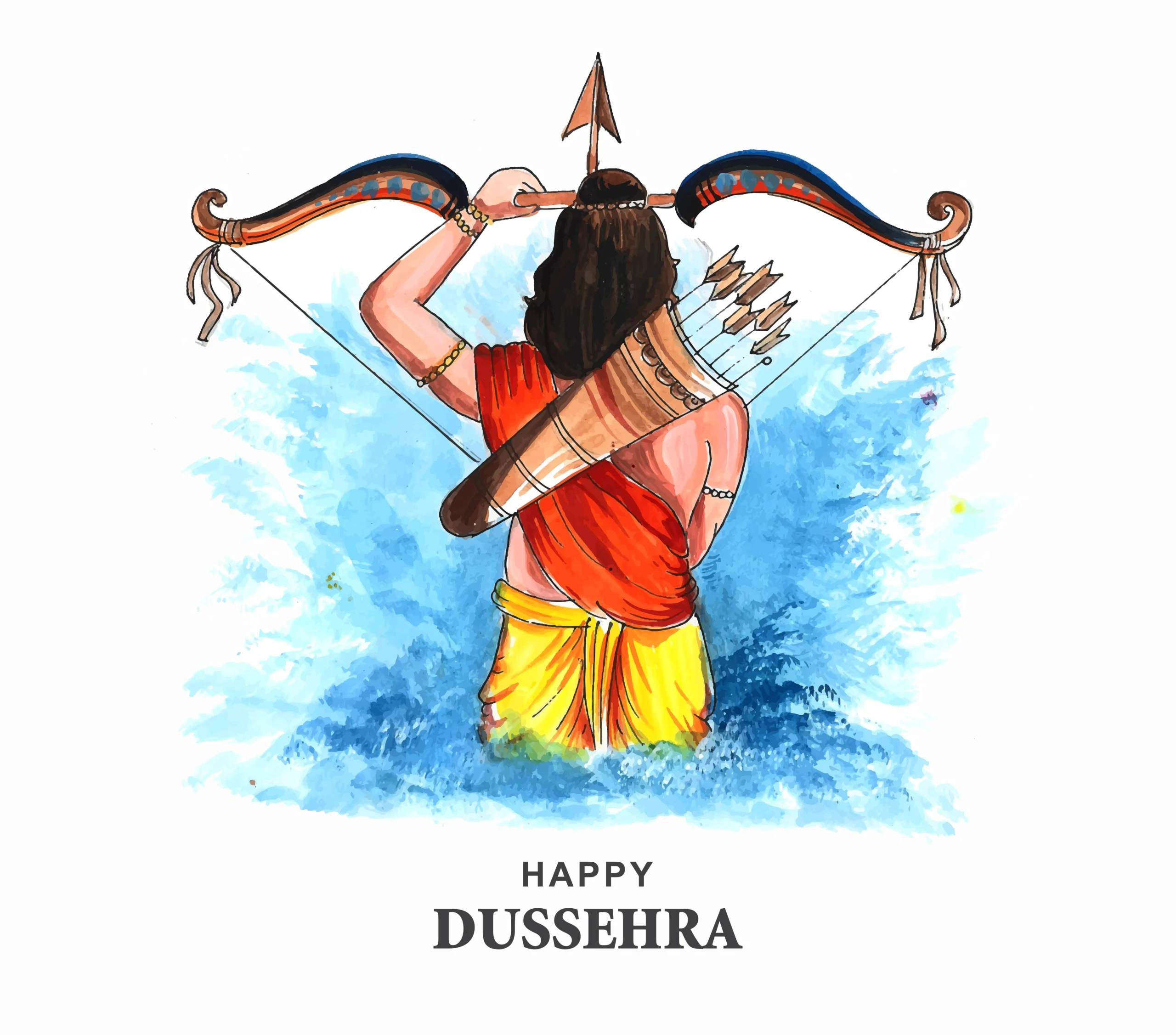
Dasara marks the victory of good over evil, and in 2026 it falls on Tuesday, 20 October. Here is what the festival means, why it is celebrated, and how different parts of India mark the day.
What is Dasara?
Dasara is a major Hindu festival held on the tenth day after the nine nights of Navratri. It falls on Dashami, the tenth day of the bright half (Shukla Paksha) of the month of Ashwin. On the Gregorian calendar, that usually lands in late September or October.
The festival goes by several names. In the north it is mostly called Dussehra, in the south and west it is Dasara, and in many temples and calendars it is Vijayadashami. In Nepal, the same season is celebrated as Dashain.
The names carry the meaning of the day:
- Vijayadashami joins two Sanskrit words: vijaya (victory) and dashami (the tenth day). Put simply, it is “the victory on the tenth day.”
- Dussehra / Dasara is commonly traced to dasha (ten) and hara (to remove or defeat). It is read as the defeat of ten-headed Ravana, or the removal of ten inner faults.
Dasara 2026 date: Tuesday, 20 October 2026. In West Bengal and nearby eastern states, Bijoya Dashami, the last day of Durga Puja, falls on Wednesday, 21 October 2026. Exact puja timings vary by city, so it is best to check a local panchang.
Dasara also opens the festive season. Diwali, the festival of lights, arrives about 20 days later.
Why do we celebrate Dasara?
Dasara is celebrated because, across several stories, this is the day when right finally won over wrong. Which story people remember depends largely on where they live.
Lord Rama defeats Ravana
The best-known story comes from the Ramayana. Ravana, the king of Lanka, carried away Sita, the wife of Lord Rama. Rama, with his brother Lakshmana, Hanuman and an army of allies, crossed to Lanka and fought a long war to bring her back. Tradition holds that Rama killed Ravana on the tenth day, which is why the day is remembered as a victory of dharma (righteousness) over adharma. This story dominates celebrations in northern, central and western India.
Goddess Durga defeats Mahishasura
In eastern India, and in many southern traditions, the focus is on the Goddess. The buffalo demon Mahishasura had grown so powerful that the gods could not stop him. Goddess Durga fought him for nine days and nights and destroyed him on the tenth. Navratri honours those nine days, and Vijayadashami marks her win. In Mysuru, the local form of the Goddess, Chamundeshwari of Chamundi Hill, is believed to have slain Mahishasura; the city’s old name, Mahishur, is linked to this legend.
The Pandavas take back their weapons
The Mahabharata adds a third story. During their final year of exile, which they had to spend in hiding, the Pandavas wrapped their weapons and hid them in a Shami tree. When the year ended on Vijayadashami, they took the weapons down, worshipped them and set out to reclaim their kingdom. This is the root of the Shami tree worship and weapon worship seen on Dasara.
All three stories share one message: however strong evil looks, it does not last.
What is the importance of Dasara?
Dasara matters on several levels at once: as a spiritual reminder, as one of the luckiest days of the year, and as a shared community event.
- A reminder to fight the evil within. Beyond the epic battles, many people read Ravana’s ten heads as ten inner faults, such as anger, greed, pride, jealousy and selfishness. Dasara is a yearly nudge to work on them.
- A day for new beginnings. Vijayadashami is treated as an auspicious day to start almost anything: a business, a purchase, a journey, or learning. In the Marathi tradition it is one of the sade teen muhurat, the three and a half most auspicious days of the year, when good work can begin without waiting for a special time.
- Respect for tools and learning. Through Ayudha Puja and Saraswati Puja, people honour the tools of their work and the books they learn from. It is a way of saying thanks for one’s livelihood and knowledge.
- A living cultural heritage. The Ramlila, the folk stage retelling of the Ramayana that ends on Dussehra, was added to UNESCO’s Representative List of the Intangible Cultural Heritage of Humanity in 2008.
- A festival that brings people together. Ramlila grounds, Durga Puja pandals, processions and fairs draw whole neighbourhoods out. Families visit elders, exchange greetings and share food.
- The start of the festive season. Dasara closes Navratri and sets the stage for Diwali, so homes, markets and shops come alive from this point on.
What is done on Dasara?
The rituals change from state to state, but most homes and communities follow some mix of these customs.
- Ramlila and Ravan Dahan. In the north, Ramlila performances run through Navratri and end on Dussehra evening. Giant effigies of Ravana, often with his brother Kumbhakarna and son Meghnad, are set alight with fireworks to show evil going up in flames.
- Durga idol immersion. In Bengal, Odisha and Assam, Durga Puja ends on Bijoya Dashami. Before the idols are taken in procession to a river or the sea, married women smear vermilion on the Goddess and on each other in a ritual called sindoor khela. People then greet each other with “Shubho Bijoya” and touch elders’ feet.
- Ayudha Puja (worship of tools and weapons). Tools, vehicles, machines, books and instruments are cleaned, decorated and worshipped. In the south this is usually done on Mahanavami, the day before, and the items are taken up again for use on Vijayadashami.
- Shami Puja. Families worship the Shami tree in the afternoon, recalling the Pandavas’ hidden weapons. A Shami leaf is often kept in the place where money or valuables are stored.
- Seemollanghan and the “gold” of apta leaves. In Maharashtra, people symbolically cross the boundary of their village or town, a custom from the days when kings and armies set out on campaigns on this date. They then exchange heart-shaped apta leaves as sona (gold) and wish each other prosperity.
- Vidyarambham (start of learning). In Kerala and parts of Karnataka, young children write their first letters in a tray of rice or sand, guided by a priest, teacher or elder. Many also begin classes in music, dance or martial arts on this day.
- Royal processions. In Mysuru, the Jamboo Savari procession carries the idol of Goddess Chamundeshwari in a golden howdah on an elephant through the city, followed by a torchlight parade.
- Starting something new. Buying a vehicle, gold or a home, or opening a new venture, is considered especially lucky on Vijayadashami.
What do we eat on Dasara?
Dasara food is mostly about breaking the Navratri fast with something sweet and celebratory. Each region has its own favourites.
| Region | Popular Dasara foods |
|---|---|
| Gujarat | Fafda and jalebi for breakfast, served with kadhi-style besan chutney, fried green chillies and raw papaya sambharo |
| North India | Jalebi (sometimes with rabri), puri, kheer, boondi laddoo |
| Maharashtra | Puran poli, shrikhand-puri, and sweet paan for guests |
| Karnataka | Mysore pak, payasam, and festive meals cooked during Navratri |
| Tamil Nadu | Sundal (spiced lentils or chickpeas) offered during Golu, plus payasam |
| West Bengal | Sandesh, narkel naru (coconut-jaggery balls), mishti doi, and payesh |
Why fafda-jalebi on Dussehra?
In Gujarat, fafda-jalebi on Dussehra morning is close to a rule. Sweet shops fry through the night before, and queues form outside them before sunrise. A popular folk belief says jalebi was Lord Rama’s favourite sweet, so it is eaten to celebrate his win. There is also a practical side: after nine days of Navratri fasting, the crisp, salty fafda made from gram flour balances the syrupy sweetness of jalebi.
Where is Dasara mainly celebrated?
Dasara is observed across India and by Hindu communities worldwide, but a few places are known for celebrations unlike any other.
| Place | What makes it special |
|---|---|
| Mysuru, Karnataka | Karnataka’s state festival (Nadahabba). The Wadiyar kings began the royal celebration in 1610, continuing a tradition from the Vijayanagara Empire. The palace is lit up for all ten days, and the festival ends with the Jamboo Savari elephant procession. |
| Kullu, Himachal Pradesh | Kullu Dussehra begins on Vijayadashami and runs for about a week. Hundreds of village deities are brought to the Dhalpur grounds to join Lord Raghunath, a tradition dating to Raja Jagat Singh in the 17th century. |
| Bastar, Chhattisgarh | Bastar Dussehra runs for about 75 days, among the longest festivals anywhere. It honours Goddess Danteshwari and local tribal deities, and no Ravana effigy is burnt. |
| Varanasi, Ayodhya and North India | Home to some of the oldest Ramlila traditions; Delhi’s Ramlila grounds draw huge crowds for Ravan Dahan. |
| West Bengal, Odisha, Assam | Vijayadashami closes Durga Puja with sindoor khela and idol immersion. |
| Maharashtra | Seemollanghan, Shami puja and the exchange of apta leaves. Nagpur also hosts a large Dasara gathering. |
| Gujarat | Nine nights of garba and dandiya, then fafda-jalebi on Dussehra morning. |
| Tamil Nadu, Karnataka, Andhra Pradesh | Golu doll displays during Navratri, Saraswati Puja and Ayudha Puja. |
| Kerala | Vidyarambham, the child’s first lesson in letters, at temples such as Panachikkad near Kottayam and Dakshina Mookambika in North Paravur. |
| Nepal | Celebrated as Dashain, the country’s biggest festival, when elders place tika and blessings on younger family members. |
Outside India, Dasara is also marked by Indian communities in the UK, the US, Trinidad and Tobago and elsewhere, where Ramlila performances have been kept alive for generations.
Read Next – Diwali: Meaning, Traditions, Rituals, Food and Why We Celebrate
References
- Vijayadashami – Wikipedia
- Dussehra / Vijayadashami 2026: date and tithi – Samvat
- Dussehra 2026: date, history and significance – Bambinos (Bijoya Dashami date)
- About Dasara – Official Mysuru Dasara website, Government of Karnataka
- Mysuru Dasara to conclude with Jamboo Savari – News On AIR
- From royal Dasara to people’s festival – Deccan Herald
- Kullu Dussehra – Wikipedia
- Bastar Dussehra – Incredible India, Ministry of Tourism
- UNESCO adds Deepavali to Intangible Cultural Heritage list – The Tribune (notes Ramlila’s 2008 inscription)
- Simollanghan: Dasara ritual in Maharashtra – HinduPad
- Ayudha Puja & Vijayadashami 2026: why Shami leaves are gold – Purohit
- Vidyarambham – Wikipedia
- Fafda – Wikipedia
- The cultural story of fafda-jalebi in Gujarat – Slurrp
- Dussehra food: traditional dishes from North to South India – Organic Tattva

मराठी
नमस्कार, मी गायत्री.
मुंबईत वाढले. आजीच्या गोष्टी ऐकत, आईने शिकवलेल्या म्हणी बोलत, घरच्या सणांच्या गडबडीत. तेव्हा कधी वाटलंच नाही की हे सगळं खास आहे.
माझी मुलगी झाली, आणि एक दिवस मनात आलं: हे सगळं तिच्यापर्यंत कसं पोहोचणार?
त्याच प्रश्नातून आपला मराठी माणूस सुरू झालं. मराठी संस्कृती फक्त आपल्यापुरती राहू नये, ती सर्वांची व्हावी. म्हणून मी मराठीत, रोमन लिपीत आणि इंग्रजीत लिहिते, जेणेकरून कोणीही मागे राहू नये.
इथे जे लिहिते, ते मी जगलेलं, ऐकलेलं आणि मोठ्यांकडून शिकलेलं आहे.
Romanized
Namaskar, mi Gayatri.
Mumbait vaadhle. Aajichya goshti aikat, aaine shikavlelya mhani bolat, gharchya sananchya gadbadit. Tevha kadhi vatlach nahi ki he sagla khaas aahe.
Majhi mulgi zali, ani ek divas manaat aala: he sagla tichyaparyant kasa pohochnar?
Tyach prashnatun Aapla Marathi Manoos suru zala. Marathi sanskruti fakta aaplyapurti rahu naye, ti sarvanchi vhavi. Mhanun mi Marathit, Roman lipit ani Engrajit lihite, jenekarun konihi maage rahu naye.
Ithe je lihite, te mi jagalela, aikalela ani mothyankadun shiklela aahe.
English
Namaskar, I’m Gayatri.
I grew up in Mumbai listening to my grandmother’s stories, repeating the proverbs my mother taught me, and getting lost in the bustle of festivals at home. Back then, I never realised how special it all was.
Then my daughter was born, and one day a thought stayed with me: how will all of this reach her?
Aapla Marathi Manoos began with that question. I don’t want Marathi culture to stay only with us; I want it to belong to everyone. So I write in Marathi, in Romanized Marathi, and in English, so that no one is left out.
Everything here is something I’ve lived, heard, or learned from my elders.