

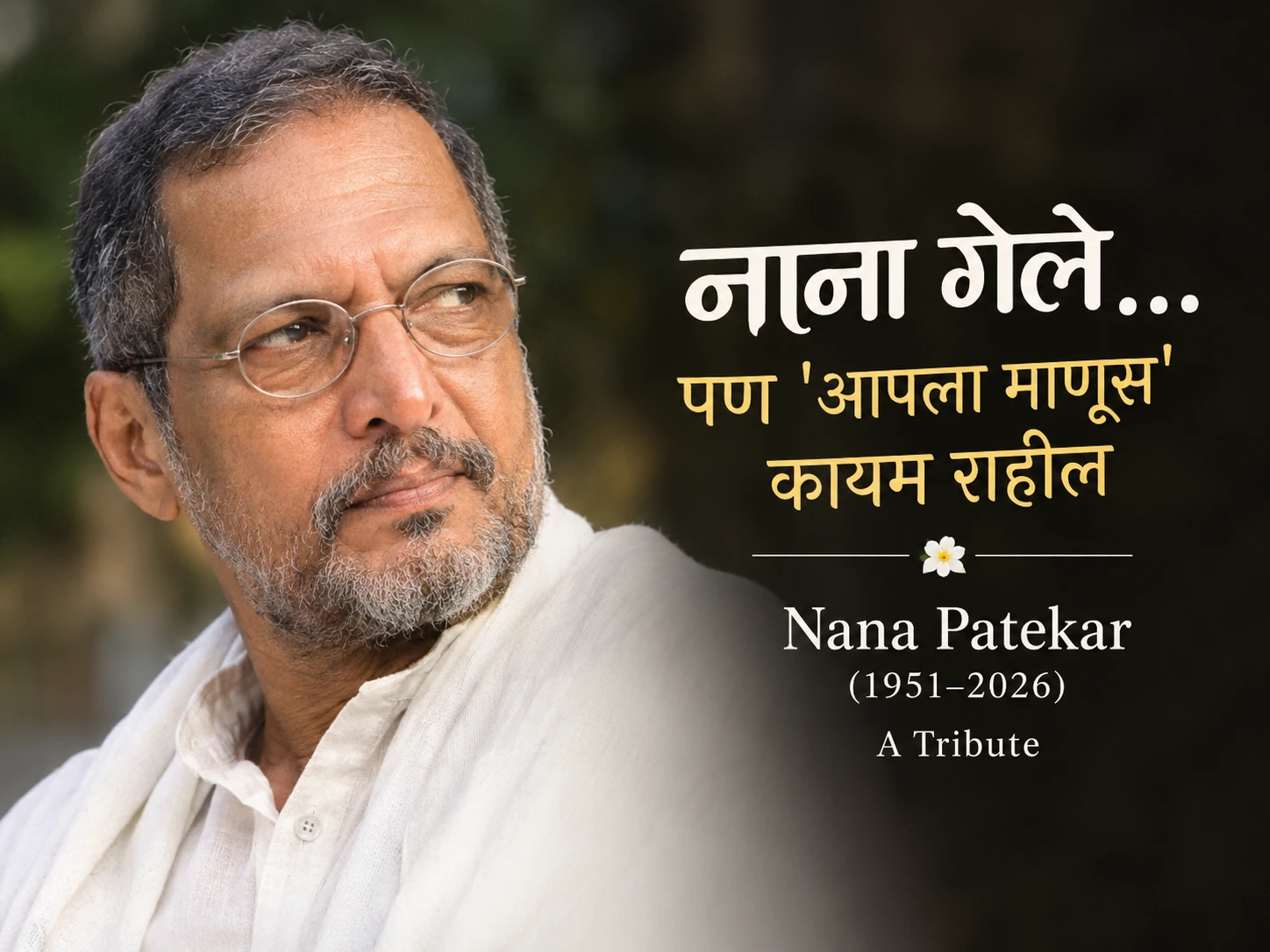
This morning, Maharashtra woke up to news it was never ready for. Nana Patekar, the man whose voice could shake a courtroom and whose silence could break your heart, passed away on Thursday, 8 October 2026, at the age of 75. He suffered a severe cardiac arrest at his home in Dona Paula, Goa, and was rushed to Manipal Hospital, but could not be saved.
For Bollywood, he was a legend. For the rest of India, he was a powerful actor. But for us, for every Marathi manoos, he was something much simpler and much bigger. He was aapla Nana. Our own.
And today, it feels like someone from our own home has gone.
The Boy from Murud-Janjira | मुरुड-जंजिऱ्याचा विश्वनाथ
Before the world knew him as Nana, he was Vishwanath Patekar, born on 1 January 1951 in Murud-Janjira, in today’s Raigad district. A coastal boy, from a simple Marathi family.
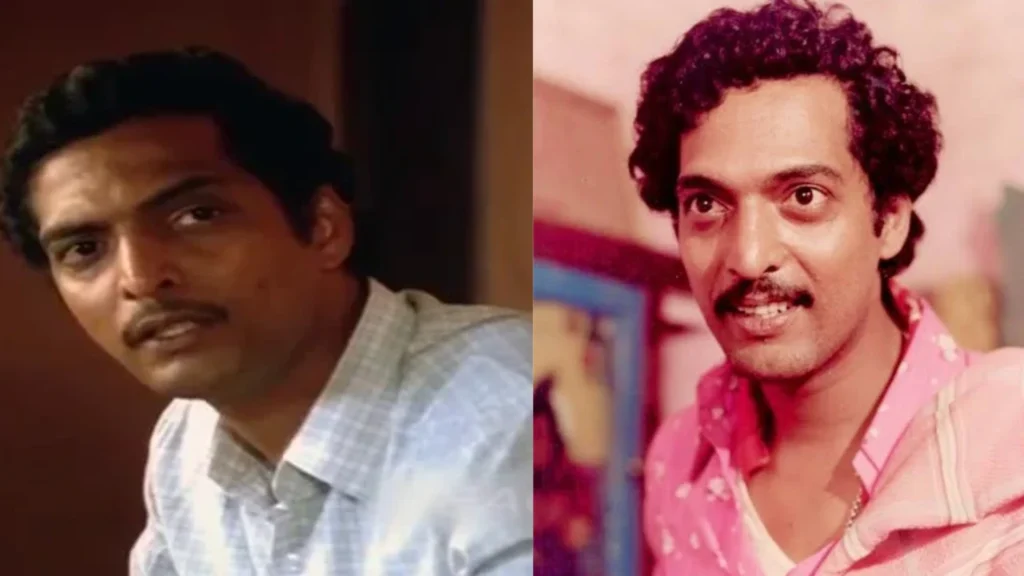
His father ran a small textile painting business and loved watching his son perform in plays. Nana once remembered how much his father encouraged him. Little Vishwanath had been acting since he was about five years old. The stage was already in his blood.
Then, at thirteen, everything collapsed.
In Nana’s own words, someone close to his father took away everything the family had, including their property. The family slid from middle class to lower middle class, and then to poor. And a thirteen-year-old boy had to go out and work.
“All of a sudden, I started working at the age of 13.” — Nana Patekar
Think about that for a moment. At an age when most of us were worrying about exams and cricket matches, Nana was earning bread for his family.
Painting Zebra Crossings, Dreaming of the Stage | झेब्रा क्रॉसिंग ते रंगमंच
The struggle did not end quickly. To earn a living, Nana took up whatever work came his way. He painted zebra crossings on Mumbai’s roads. He painted film posters, posters of heroes he would one day stand beside.
He studied at the Sir J.J. Institute of Applied Arts, worked as a commercial artist and visualizer in advertising, and kept going back, again and again, to the one place where he felt fully alive: the Marathi stage.
It was on the Marathi theatre stage, in plays like Purush and Hamidabaichi Kothi, that the fire inside him found its voice. Vijaya Mehta directed his very first play. Marathi rangbhoomi didn’t just train Nana. It made him.
The man who once painted lines on roads for strangers to walk on would one day draw a line of his own in Indian cinema, one that nobody else could cross.
The Fire on Screen | पडद्यावरची आग
Nana made his film debut with Gaman in 1978, and then did small roles in Marathi cinema. Success did not come overnight. It came the hard way, the Nana way.

And when it came, it came like a storm.
- Parinda (1989), where his chilling turn as the crime lord Anna won him the National Award for Best Supporting Actor.
- Prahaar (1991), which he also directed, and for which he trained with the Indian Army for nearly three years. He didn’t want to act like a soldier. He wanted to become one.
- Krantiveer (1994), the film that won him the National Award for Best Actor. His climax monologue in that film still gives goosebumps to people who weren’t even born when it released.
- Welcome (2007), where the whole country fell in love with the soft-hearted gangster Uday Shetty.
- Natsamrat (2016), which became a gift to every Marathi household. For many of us, it was the first time we cried in a theatre together with our parents.
He was honoured with the Padma Shri in 2013. Yet he lived for years in a simple 1BHK flat in Andheri with his mother. Fame never moved into his home. Only his values did.
He once said something that tells you everything about how he saw his own success:
“I run a printing press from where I get my bread. If at all I get any butter, it comes from acting.”
And even in his last years, he never stopped. Ole Aale, The Vaccine War, Vanvaas, and his 2026 work in O’Romeo and the web series Sankalp. The fire never dimmed. Not once.
A Soldier, Not Just in Films | खऱ्या आयुष्यातला सैनिक
What happened during Prahaar changed Nana forever. He was commissioned as a Captain in the Territorial Army, and in 1999, during the Kargil War, he went to serve with the Maratha Light Infantry. Not for a shoot. Not for publicity. For the country.
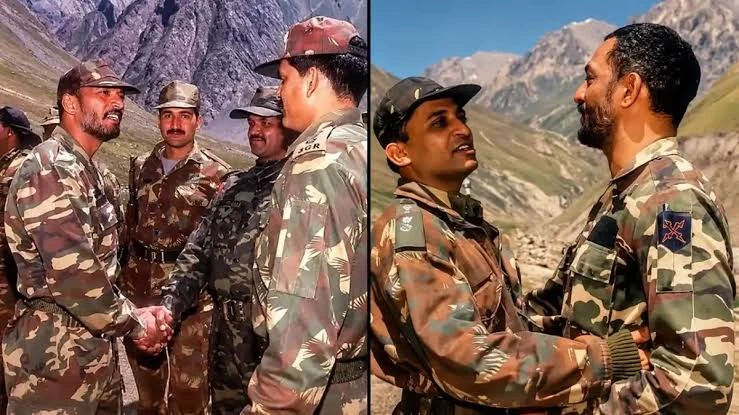
He was later made an Honorary Lieutenant Colonel. Very few actors have worn the uniform for real. Nana did, and he wore it with the same honesty he brought to everything else.
The Pain He Carried Quietly | न सांगितलेलं दुःख
Behind the angry young man of the screen was a man who had lost a lot.

His father passed away of a heart attack when Nana was just 28. His first son, Durvasa, was born unwell and passed away when he was only about two and a half years old.
Years later, in an interview, Nana did something very few men of his generation ever do. He confessed his own shame. He admitted that when his son was born, his first thought was not about the child’s pain, but about what people would say, what kind of son Nana has. He called himself selfish for it.
That honesty is rare. It takes a strong man to break his own image in front of the world. Nana was that man. He didn’t want to be seen as perfect. He wanted to be seen as true.
And when his mother, Nirmala Patekar, passed away in 2019 at the age of 99, Nana lost the woman he had lived beside his whole life.
The Farmer’s Son Who Never Forgot the Soil | शेतकऱ्यांचा नाना
If there is one thing Maharashtra will never forget, it is this.
In 2015, Marathwada faced one of its worst droughts. Crops died. Wells went dry. And farmers, unable to bear the weight of debt and shame, started taking their own lives. While the country debated, Nana acted.
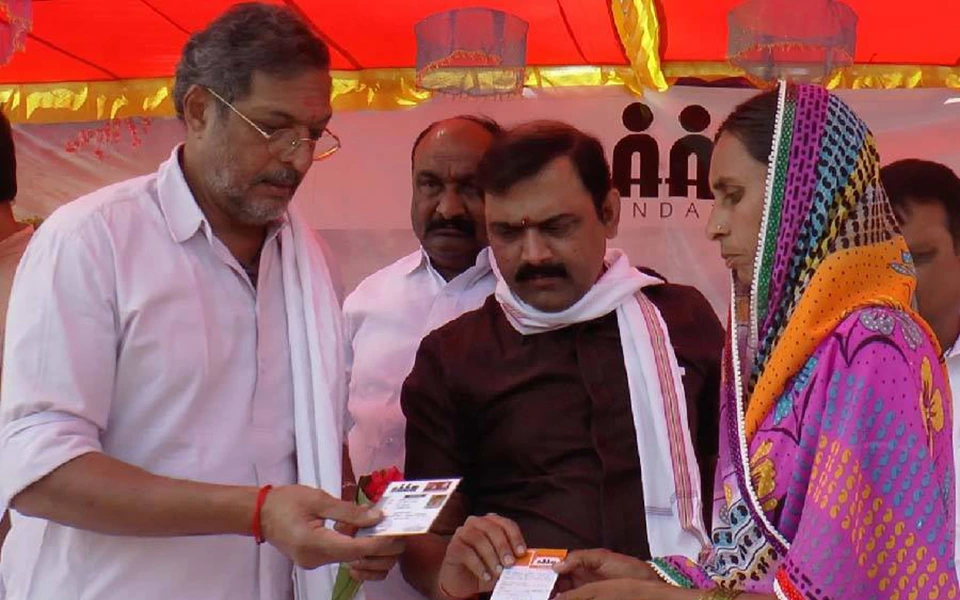
Together with his friend and fellow actor Makarand Anaspure, he started the Naam Foundation. Their first step was simple and urgent: ₹15,000 to each family of a farmer who had died by suicide, beginning with 113 families in Latur and Osmanabad. On the very first day the foundation’s bank account opened, ordinary people donated nearly ₹80 lakh. Because people trusted Nana.
He didn’t wait for the system. His message was simple: let the government do its own work, and let us do ours.
But Nana knew money was only a bandage. So the Naam Foundation went deeper, literally. Over the years, it deepened and widened 492 streams and rivers in drought-hit villages of Maharashtra. It built a residential school in Arvi village, Beed, for children whose fathers had died by suicide. The foundation also reports building houses for affected families.
Somewhere in Marathwada tonight, a child is studying in a school that exists because of Nana. Somewhere, a farmer is looking at water in a stream that was dry ten years ago. That is Nana’s real filmography. And no award will ever be big enough for it.
What Nana Taught Us | नानांनी शिकवलेलं
Nana was never easy. He was blunt, short-tempered, and fiercely private. He said what he felt, even when it cost him. But underneath that roughness was a set of values he never compromised on:
- Simplicity. A Padma Shri who lived in a 1BHK and cooked his own food.
- Self-respect. “I don’t need others to validate my good conduct,” he once said. And he never asked for validation.
- Hard work over shortcuts. He reportedly refused to launch his own son Malhar’s career, believing he should struggle and earn his place, just like his father did.
- Rootedness. No matter how big Bollywood made him, he remained, at heart, a Marathi manoos from the Konkan coast.
Prime Minister Narendra Modi, in his tribute today, spoke of Nana’s “intensity, individuality and unmistakable presence.” Three words that fit him perfectly. But we would add one more: maanuski. Humanity.
आपला माणूस | Our Own Man
In 2018, Nana starred in a Marathi film called Aapla Manus. Today, that title feels like it was written about him.
Because that is what he was. Not a superstar who visited us from a distance, but someone who belonged to us. The boy who painted roads. The actor who shook the nation. The soldier who went to Kargil. The man who helped farmer families stand again in villages whose names most of us will never know.
Nana, you told us that life teaches what no school can. You taught us the rest.
नाना, तुम्ही गेलात… पण तुमचा आवाज, तुमचा राग, तुमची माणुसकी, आमच्यात कायम राहील. Nana, tumhi gelaat… pan tumcha aawaaz, tumcha raag, tumchi maanuski, aamchyaat kaayam raahil. Nana, you are gone… but your voice, your fire and your humanity will live on in us forever.
भावपूर्ण श्रद्धांजली. 🙏 Bhaavpoorna shraddhaanjali. Heartfelt tributes.
If Nana’s life moved you, the most meaningful tribute you can offer is to support the cause he gave his heart to. The Naam Foundation continues its work for Maharashtra’s farmers at naammh.org.
How will you remember Nana? Share your favourite Nana moment, film or dialogue in the comments below.
References
- Nana Patekar dies at 75: A look at his remarkable five-decade career — Business Standard, 8 October 2026
- Acclaimed Indian actor Nana Patekar dies aged 75 – Al Jazeera, 8 October 2026
- Nana Patekar – Wikipedia
- Nana Patekar filmography – Wikipedia
- Krantiveer – Wikipedia
- Nana Patekar’s NAAM Foundation for affected farmers raises Rs 80 lakh on first day – YourStory
- 9 Years Journey of Naam Foundation – Naam Foundation profile on Benevity
- Nana Patekar Is Helping Drought Affected Farmers & Their Families – The Better India
- Nana Patekar reveals the death of his eldest son – BollywoodShaadis
- Nana Patekar’s mother Nirmala Patekar passes away at 99 – Republic World
- Nana Patekar: “When I was just 13…” – quotes collection
- Happy birthday Nana Patekar: Interesting facts about the actor – Asianet Newsable
- Nana Patekar biography – StarsUnfolded
- Nana Patekar on his struggle and OTT debut Sankalp – Navbharat Live (Hindi)
- Bharatpedia: Nana Patekar
- Naam Foundation official website

मराठी
नमस्कार, मी गायत्री.
मुंबईत वाढले. आजीच्या गोष्टी ऐकत, आईने शिकवलेल्या म्हणी बोलत, घरच्या सणांच्या गडबडीत. तेव्हा कधी वाटलंच नाही की हे सगळं खास आहे.
माझी मुलगी झाली, आणि एक दिवस मनात आलं: हे सगळं तिच्यापर्यंत कसं पोहोचणार?
त्याच प्रश्नातून आपला मराठी माणूस सुरू झालं. मराठी संस्कृती फक्त आपल्यापुरती राहू नये, ती सर्वांची व्हावी. म्हणून मी मराठीत, रोमन लिपीत आणि इंग्रजीत लिहिते, जेणेकरून कोणीही मागे राहू नये.
इथे जे लिहिते, ते मी जगलेलं, ऐकलेलं आणि मोठ्यांकडून शिकलेलं आहे.
Romanized
Namaskar, mi Gayatri.
Mumbait vaadhle. Aajichya goshti aikat, aaine shikavlelya mhani bolat, gharchya sananchya gadbadit. Tevha kadhi vatlach nahi ki he sagla khaas aahe.
Majhi mulgi zali, ani ek divas manaat aala: he sagla tichyaparyant kasa pohochnar?
Tyach prashnatun Aapla Marathi Manoos suru zala. Marathi sanskruti fakta aaplyapurti rahu naye, ti sarvanchi vhavi. Mhanun mi Marathit, Roman lipit ani Engrajit lihite, jenekarun konihi maage rahu naye.
Ithe je lihite, te mi jagalela, aikalela ani mothyankadun shiklela aahe.
English
Namaskar, I’m Gayatri.
I grew up in Mumbai listening to my grandmother’s stories, repeating the proverbs my mother taught me, and getting lost in the bustle of festivals at home. Back then, I never realised how special it all was.
Then my daughter was born, and one day a thought stayed with me: how will all of this reach her?
Aapla Marathi Manoos began with that question. I don’t want Marathi culture to stay only with us; I want it to belong to everyone. So I write in Marathi, in Romanized Marathi, and in English, so that no one is left out.
Everything here is something I’ve lived, heard, or learned from my elders.